Cell Therapy & Islet Encapsulation
more stable than Ca-Alginate
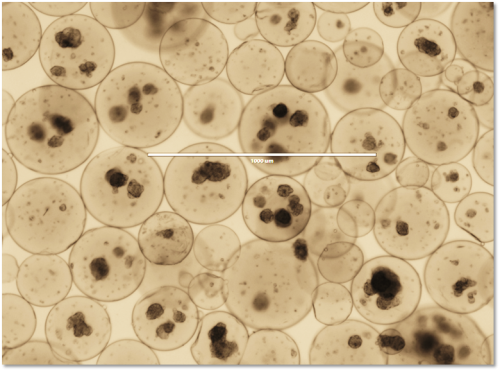
Temperature responsive gelation of poly(2-3)Glucose™ is a robust, and easy to use alternative to calcium alginate encapsulation. Encapsulation with a temperature responsive gel starts by forming a water in oil emulsion below the gel temperature (27 C) and then heating to 37 C. The gel is stable at 37 C, without concern for ionic leaching. Further advantges come from biocompatibility. Mesenchymal stem cells do not proliferate or differentiate while living on a poly(2-3)Glucose™ film. poly(2-3)Glucose™ capsule murine implants demonstrate angiogenesis and no evidence of scarring.
poly(2-3)Glucose™ enables cell therapy with allogenic and xenogenic transplants. Encapsulation confers immunoprotection. Encapsulated exogenous cells thrive and continue to produce cytokines and hormones in vivo. The biocompatible capsule is permeable to molecules smaller than 100 kDa. Wall thickness of 100 micron are easily achieved to normally oxygenate and perfuse encapsulated cells [“Human Islets in Minimal Volume Capsules Utilizing a Novel Glucose
Polymer,” A Gorkovenko, et al, IPITA 2013 presentation; S Bartlett, et al, “Report from IPITA-TTS Opinion Leaders Meeting on the Future of β-Cell Replacement,” Transplantation. 100 Suppl 2s. S1-S44, 2016.]
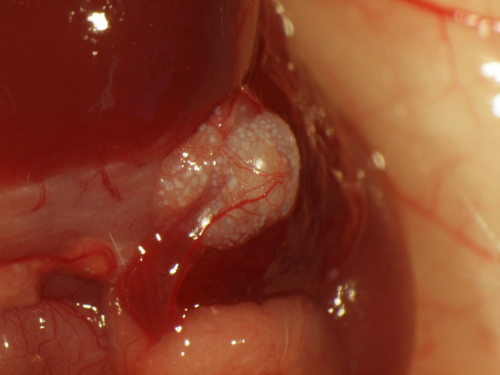
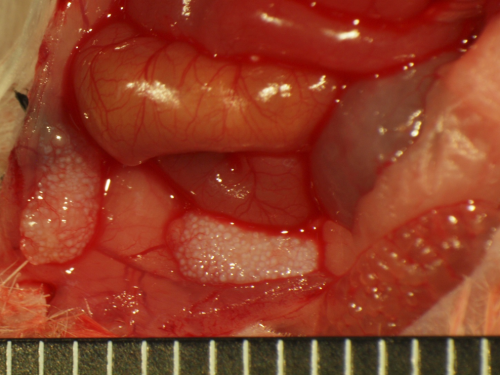
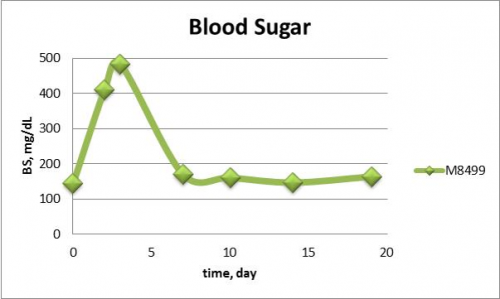
Islet transplantation is an example of effective cell therapy. Human islets were encapsulated in collaboration with Prodo Labs using T1-25. The islets were transported at 10 C to Japan were they were implanted 48 hours later in a streptozotocin induced diabetic mouse. poly(2-3)Glucose™ encapsulated human islets restored normoglycemia to the immune competent mouse. The islets were implanted in the murine abdominal cavity. Upon excision after one month, blood vessels had grown into the implant mass and the surrounding tissue appeared normal.
Free-standing membranes of poly(2,3)Glucose™ for macro-encapsulation are in development.
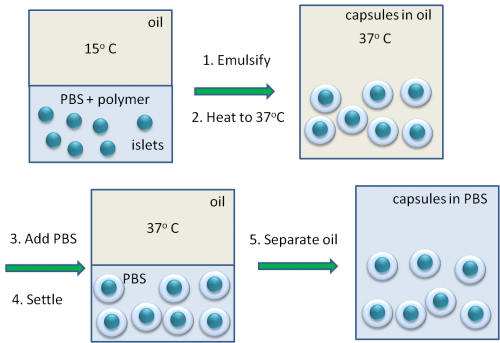
A cell pellet is resuspended in a 15% w/v solution of T1-25 polymer (25 C transition temperature) with either PBS or growth media as solvent. This suspension is then mixed with oil at 18-20 C to make a water in oil emulsion (1 minute.) Once the emulsion is formed, the temperature is raised to 37 C and the polyglucose gels into a permeable, biocompatible, non-toxic capsule (0.5 minute.) Additional media is added and the oil separates (3 minutes.) The oil is decanted and the encapsulated cell suspension is ready. Capsule diameter (or wall thickness) is controlled in the emulsification process. The resulting capsules are delivered by syringe or catheter.

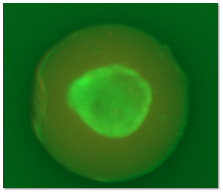
Islets centered in capsule
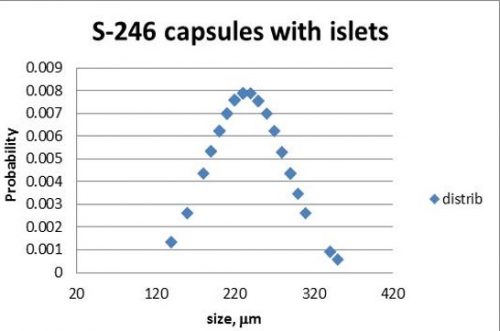
Capsule size is controlled
Capsules support angiogenesis
Encapsulation provides immunoprotection
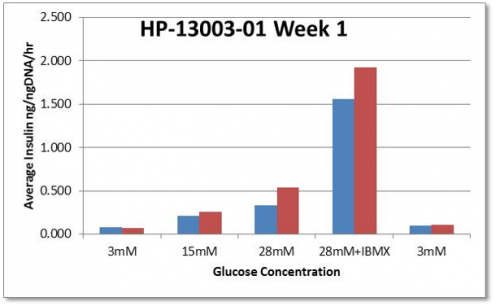
Encapsulated HI function normally
Normoglycemia after Transplantation
Cell Release and Transport
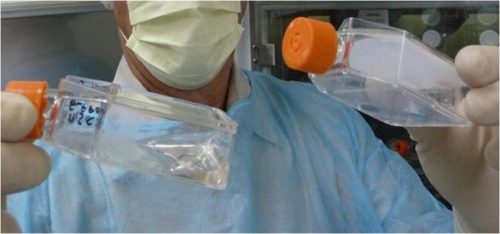
Human mesenchymal stem cells are in a quiescent state while living on a layer of T1-30 gel at 37o C. They do not expand or differentiate. The cells are recovered without trypsin by chilling the gel and dissolving the gel substrate. A thinner application of the polymer supports cell expansion and trypsin-free release. If cells are expanded directly on the culture flask surface, covering the cells at 80% confluence, can introduce temporary quiescence for transport. The quiescent cell metabolism is greatly reduced compared to the expanding cell, so food and oxygen demand are also reduced. If the gel transition is below ambient temperature, the cell coated surface can be transported in growth media at ambient temperature. Upon arrival, the gel blanket is removed by chilling, decanting, and replacing with growth media.
hMSC Quiescence on T1-30
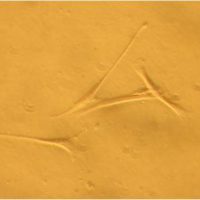
hMSC Recovery