Polymer of Glucose
synthetic, defined material like PEO

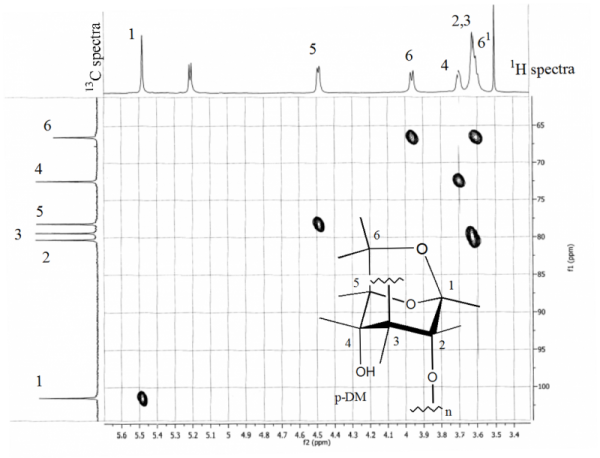
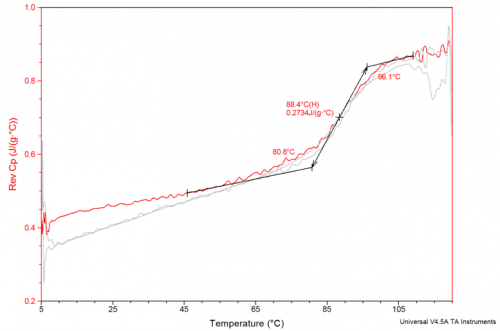
Poly(2-3)glucoses are poly(2-3)-1,6-anhydro-β-D-glucopyranoses derivatized at the number 4 carbon of the glucose ring. These side groups control the gel temperature. Reverse thermal gelling polymers T1-25, T1-30, and T1-35 have glyme substituents and a monofunctional secondary hydroxyl endgroup.
These defined poly(2-3)-1,6-anhydroglucopyranose polymers have precise length, weight, and structure. These carbohydrates are linked by (2-3) ether not glycosidic bonds, hence poly (2-3) glucose is a polyether, not a polysaccharide. The typical polydispersity index (PDI) of these synthetic carbohydrate polyethers is 1.06, which is considerably lower than the PDI for nearly all carbohydrate polymers found in nature as well as most man-made polymers. The molecular weight is 40 kDa. Like natural polysaccharides, these sugars display a high degree of regiospecificity and stereospecificity. Poly (2-3) glucose polymers are defined materials.
Regio and stereospecificity